





Firmware 2.4 now released. Once again, more functions added
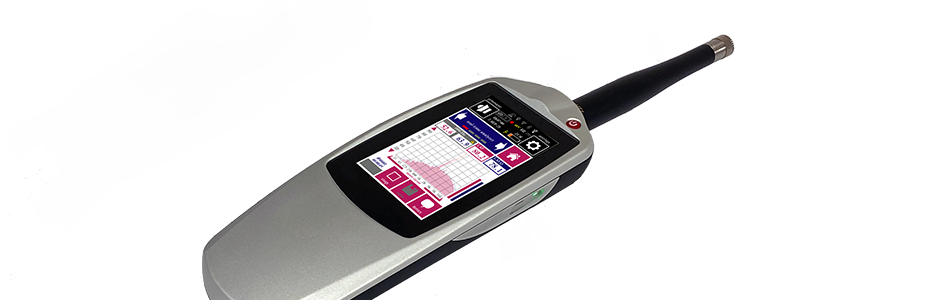
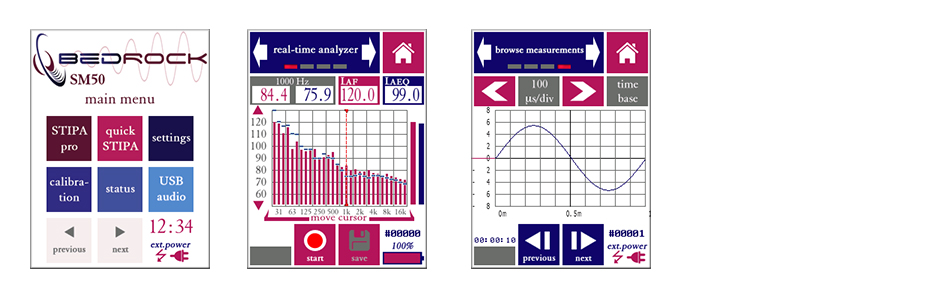
Firmware version 2.4 for the SM30, SM50 and SM90 has been released. As always, the new firmware adds exciting new features to your instrument - and as always, it's free. Firmware 2.4 adds one completely new module: RTA logging. This module is designed for long-term logging of spectral data. It is also useful to generate spectrograms.
The functionality of the RT60 module was enhanced: it now implements both the interrupted noise method as well as the impulse method (both of which conforming to ISO 3382). This means that you can use either a spherical noise source (spherical loudspeaker) or an impulse generator (clapper, starter gun, etc).
Perhaps the biggest change is found only under the hood: a completely new remote control API was implemented. This means that third party applications (on PC, mac, Raspberry PI or any other platform) can now fully control the SMxx via USB. This enables powerful new applications and setups. Contact us if you would like to use this API; documentation (as well as a C# reference library) are made available upon request.
Overview of the new features in Firmware 2.4:
- RTA logging module added
- Impulse method added too RT60 module
- Powerful remote control API implemented
- Various smaller improvements and bug fixes (e.g. the status of the 48V phantom power is now continuously indicated).
The update package can be downloaded here (note that logging in is no longer required). The manual has also been updated. As always, the update is free for all existing and new owners of the Bedrock SMxx.
Your feedback and bug reports are (as usual) gratefully received and used towards future updates.
Acoustic calibrators are now added to our product line-up
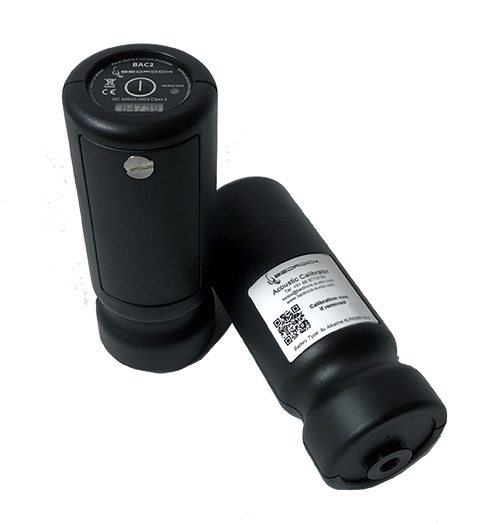
Acoustic calibrators enable you, as a user of acoustic measuring instruments, to verify the level calibration of your instrument, and make adjustments if needed. It is considered "good laboratory practice" to do this before and after every measuring session. Even though our microphones are exceedingly stable, it is still a good idea to adopt this measure as a precaution.
We offer two product versions: BAC1 and BAC2 (respectively for class 1 and class 2 devices). The devices are easy to operate and require very little maintenance. Each device comes with a calibration certificate issued by an external accredited laboratory. The Bedrock BAC2 (class 2 version) comes complete with an adapter for our standard class 2 microphone (BAMT2).
Get the most out of the SMxx instruments with our MS Excel tools
As many of you will know, we offer a series of tools for importing data from the Bedrock SMxx instruments (SM30/SM50/SM90) into MS Excel. You will need a recent version of MS Excel (2010 or newer).
These import tools read multiple output files from the SM50 (STIPA, SLM and RTA mode) and convert these into a manageable table. You can also use the tools to easily browse through the measurements. The files can be downloaded here.
There are many different combinations of Excel versions, Windows versions and software that interacts with Excel. We've tested the tools on the most common combinations, but we can't rule out that some people might get unexpected results. So please review your data carefully when you first use these files. Unfortunately, for now, the tools usually do not work in Mac OSX (theoretically, as long as you have VB installed, it should work - but in practice this is not always the case).
Your feedback is as always appreciated; all bug reports are (as usual) gratefully received and used in future updates.
The Bedrock SM50: speech intelligibility meter, and more...
The Bedrock SM50 is the first Speech Transmission Index meter that has been completely developed and designed by the inventors of STIPA. The design is based on a simple philosophy: we wanted to create the best and most accurate STI measuring instrument there is, while making it very easy to use at the same time.
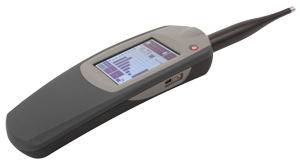 A unique measuring instrument
The SM50 is not only a Speech Transmission Index meter, but also a fully compliant class 2 / type 2 sound level meter (IEC 61672, ANSI S1.4) and a class 0 real-time analyzer (IEC-61260). Not to mention a RT60 meter, LAEQ logger and oscilloscope. Even seasoned acoustical engineers and audio professionals tell us that those features are really everything they need in their day-to-day work.
More info is found elsewhere on this website.